 |
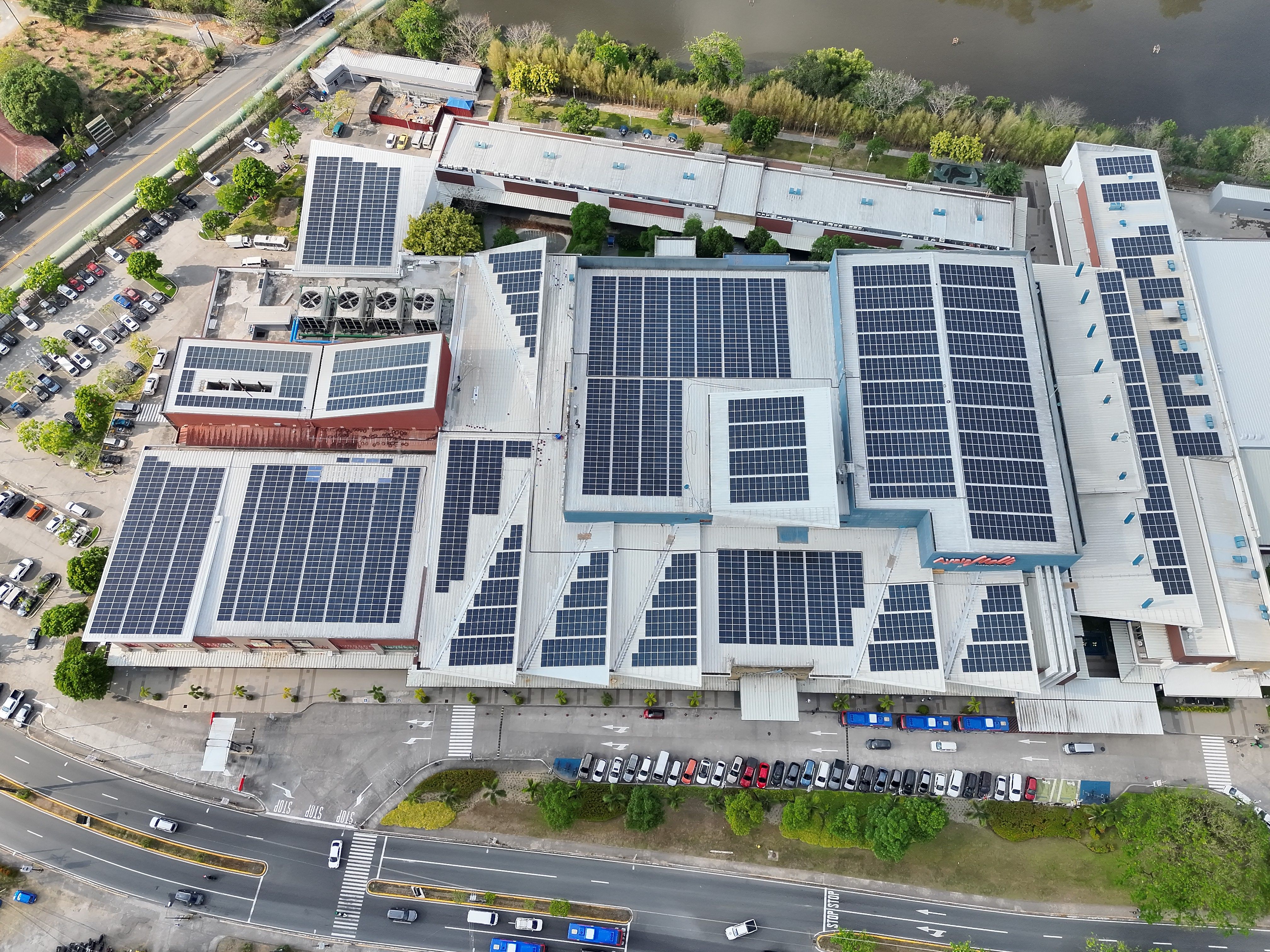
| (Image Source: Ayala Land Inc.) |
Rising energy costs, increasing climate volatility, and evolving regulatory pressures are reshaping how commercial developments operate — placing efficiency and resilience at the center of long-term value. For Ayala Land, this shift is not new. Across its mall portfolio, sustainability and energy efficiency have long been embedded into how developments are planned, built, and operated — reflecting a view that resilience is determined as much by operational discipline as by location or demand.
A Long-Standing Shift Toward Renewable Energy
Energy sourcing is one of the most significant areas where Ayala Malls’ sustainability efforts are already delivering scale and measurable impact. As of 2025, 98% of Ayala Malls operate on renewable energy with 31 malls transitioned to renewable power through accredited Retail Electricity Suppliers or Renewable Energy Suppliers. All renewable electricity consumption is supported by International Renewable Energy Certificates (iRECs), providing third‑party verification of renewable sourcing. This transition represents an operational shift rather than a pilot initiative. Renewable energy now accounts for 98% of electricity used across 31 out of 32 malls, materially reducing reliance on conventional power sources. In addition to emissions reduction, Ayala Malls estimates potential annual savings of up to Php180M (180 million pesos), underscoring how renewable energy adoption also supports cost management amid energy price volatility. In today’s higher-cost environment, that matters not only for margins, but also for Ayala Malls’ ability to manage operating pressures without compromising the quality of the mall experience for shoppers and merchants. All new malls are programmed to transition to renewable energy, embedding clean energy into standard operating requirements rather than treating it as a post-construction upgrade. “Renewable procurement is only one part of our energy framework. We take a diversified approach, combining clean power sourcing with onsite generation to improve resilience, manage risk, and support stable, long-term energy performance across our malls,” said Ayala Malls Chief Operating Officer Paul Birkett.
Scaling On‑Site Solar Across The Portfolio
Beyond power procurement, Ayala Malls continues to expand on‑site renewable generation. Thirteen malls currently have solar roof installations, with a combined installed capacity of approximately 15.3 megawatts peak (MWp). A further 19 malls are in various stages of bidding or discussion for solar roof installations, representing around 20 MWp in potential additional capacity once implemented. Ayala Malls’ phased rollout of solar rooftops reflects a long-term, portfolio-wide strategy rather than one-off adoption. By scaling installations based on site conditions and requirements, it has steadily built distributed renewable capacity — still uncommon at this scale in Philippine retail. This supports Ayala Land’s broader goal of embedding energy resilience, reducing reliance on centralized power, and strengthening operational reliability. Greater energy resilience also helps support more dependable day-to-day operations, which becomes especially important when consumers and tenants are already navigating a more volatile operating environment.
Energy Efficiency At Scale
Renewable energy adoption is complemented by sustained efficiency improvements across operations. In 2025, total electricity consumption increased by 8% year-on-year, driven by new mall openings, improved occupancy, and ongoing redevelopment projects. Despite this growth, common area energy use declined compared to 2024, due to application of best practices and engineering intervention. Ayala Malls’ energy intensity was recorded at 76.6 kWh per square meter, maintaining performance even as operations expanded. This is supported by specific efficiency measures, including LED lighting upgrades, zoning and sensor‑based controls, energy‑efficient escalators and elevators, high‑efficiency chillers, variable‑frequency drives, and passive design strategies such as natural lighting and ventilation. These systems are designed to deliver consistent performance as malls scale up, rather than generating short‑term efficiency gains that taper over time.
Embedding Sustainability From The Design Stage
Forward planning is evident in how new developments are conceptualized. All new Ayala Malls projects are required to pursue green pre‑certification, incorporate recycled materials where feasible, and assess the inclusion of solar roofing and water reuse systems during the design phase. By 2025, six new project launches had already secured EDGE pre‑certification, with a structured pipeline aimed at progressively increasing the number of certified malls year‑on‑year. This approach helps reduce future retrofit requirements while aligning developments with evolving green building standards early in their lifecycle.
Measured Environmental Outcomes
The cumulative impact of these initiatives is reflected in portfolio‑level environmental metrics. Total greenhouse gas emissions for Ayala Malls in 2025 were recorded at 24,068 tCo2e (tonnes of carbon dioxide enrollment) with renewable electricity forming the largest lever for emissions reduction. Water management measures reduced total water use by 11% year‑on‑year, even as occupancy improved, while 41% of solid waste was diverted from landfills, surpassing internal targets. These results are driven by operational systems covering energy, water, waste, and mobility — implemented consistently across properties rather than through isolated interventions. “Sustainability is integral to how we operate as a business. Through responsible infrastructure, energy-efficient systems, and consistent operating standards, we create environments where tenants perform better, communities stay engaged, and our assets remain resilient and competitive over the long term,” said Burkett.
Building With Long‑Term Performance In Mind
Taken together, Ayala Malls’ sustainability and energy efficiency initiatives reflect a long‑term approach to asset management — one that assumes changing energy markets, regulatory requirements, and climate conditions as part of the operating environment. By investing early, standardizing design and operating practices, and scaling proven solutions across its portfolio, Ayala Malls continues to strengthen the ability of its developments to operate efficiently and reliably over time.
In the current environment, these initiatives do more than advance sustainability targets. They help protect profitability, support more stable operating conditions for merchants, and enable Ayala Malls to maintain a positive experience for consumers even as costs and external pressures rise. More broadly, it signals a shift in how value is created in real estate — where performance over time, not just development at a point in time, increasingly defines leadership.
